
 SAME DAY SERVICE - CLICK TO CALL
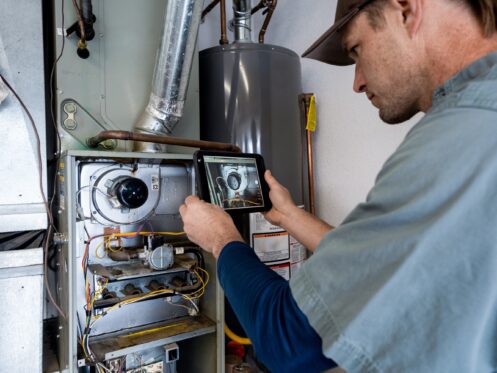
Robust, efficient home heating is essential throughout the “Show Me State.” In the past, most households in Missouri used furnaces for heat. But that is starting to change. Heat pumps have recently surpassed furnaces in sales for the first time. Experts believe this trend will keep going. Let’s explore the pros and cons of these options.
Geothermal Heating
Traditional heating systems warm homes by generating heat directly, often through combustion. Heat pumps are different: they move heat energy from one space to another. Heat pumps are like air conditioners. But, they have reversing valves. These valves allow the process to flow in both directions. What sets geothermal systems apart from other heat pumps is that they have a ground loop. That loop helps move heat energy to and from the ground. It’s an efficient method, even in the cold. Geothermal systems can be pricey. However, the long-term benefits often make them a sound investment.
Air-Source Heat Pumps
Standard heat pumps transfer heat energy to and from the ambient air. These technologies cost less than geothermal ones, but they have a potential drawback. The ambient air in winter has limited heat energy, and that can cause efficiency issues at night. Some high-efficiency air-source heat pumps can provide year-round comfort throughout Missouri. Some less expensive options on the market aren’t as good as standalone solutions.
Hybrid Heating
A hybrid heating configuration, or dual-fuel heat pump, is a solution to that problem. These systems pair a mid-efficiency air-source heat pump with a mid-efficiency fuel-fired furnace. The heat pump delivers the home’s cooling and about 85% of its heating. The auxiliary furnace takes over on particularly cold nights to maintain efficiency. A furnace works efficiently, regardless of the outdoor temperature.
Electric Furnaces
An electric furnace is a type of forced-air furnace that generates heat via an electric coil. An electric furnace has nearly 100% efficiency, which is a big advantage over other types. Electric furnaces used to be the top choice for homes without fuel heating options. That’s become less the case since advancements in heat pump technologies. Heat pumps are also electric heating systems. They can offer 300% efficiency or more.
Fuel-Fired Furnaces
A fuel-fired furnace is a forced-air system. It burns natural gas, liquid propane, or heating oil. Standard gas furnaces are approximately 80% efficient. While that’s not as good as electric furnaces, gas furnaces cost less to run due to the relative price of fuel. Over the lifespan of a furnace, the total cost will usually be considerably lower with fuel. Another consideration with furnaces is the temperature of the heated air. Fuel-burning furnaces provide heated air at between 120 and 140 degrees Fahrenheit. Electric furnaces provide it at about 95 degrees. Those are both above body temperature, so the result is the same. Still, many people prefer gas heat because it feels warmer and more forceful to them.
Programmable and Smart Thermostats
You can choose advanced thermostat control with all the heating options we listed. A basic programmable thermostat can reduce annual heating costs by up to 8% on average. Smart thermostats have features beyond scheduling and profiles to help you save. These can include energy monitoring, rate awareness, predictive maintenance, and occupancy sensing.
Zone Control Systems
Zoned heating can increase smart control savings from 8% to as much as 30%. There are a couple of approaches to implementing a zone control system in Missouri. An installer can add it to a central HVAC system with certain upgrades. These include smart thermostats for zone control, a variable-speed air handler, and duct dampers. The other option is to install a ductless mini-split heat pump. Standalone mini-split heating isn’t usually a primary solution. It’s a cost-effective way to heat bedrooms, finished basements, and similar areas.
Furnace and Whole-House Humidifiers
Optimizing relative humidity (RH) can help achieve comfort at a lower temperature. Bypass humidifiers can offset the drying-out effect that furnaces can have. Whole-house humidifiers work with any heating system. They help you control humidity throughout your home.
Expert Heating System Selection Guidance Throughout the Ozarks
FTS Heating & Cooling is a local and trusted HVAC contractor with locations in Lebanon, Marshfield, and Springfield, MO. Our company has over 30 years of experience serving the region. NATE-certified technicians install our heating systems to code and the manufacturer’s warranty requirements. Those include furnaces, heat pumps, hybrid systems, mini-splits, and much more. To schedule an in-home installation consultation, call today or contact us online.
End Of Article